
THE ROOTS OF SAMBA: O SAMBA é PRETO.
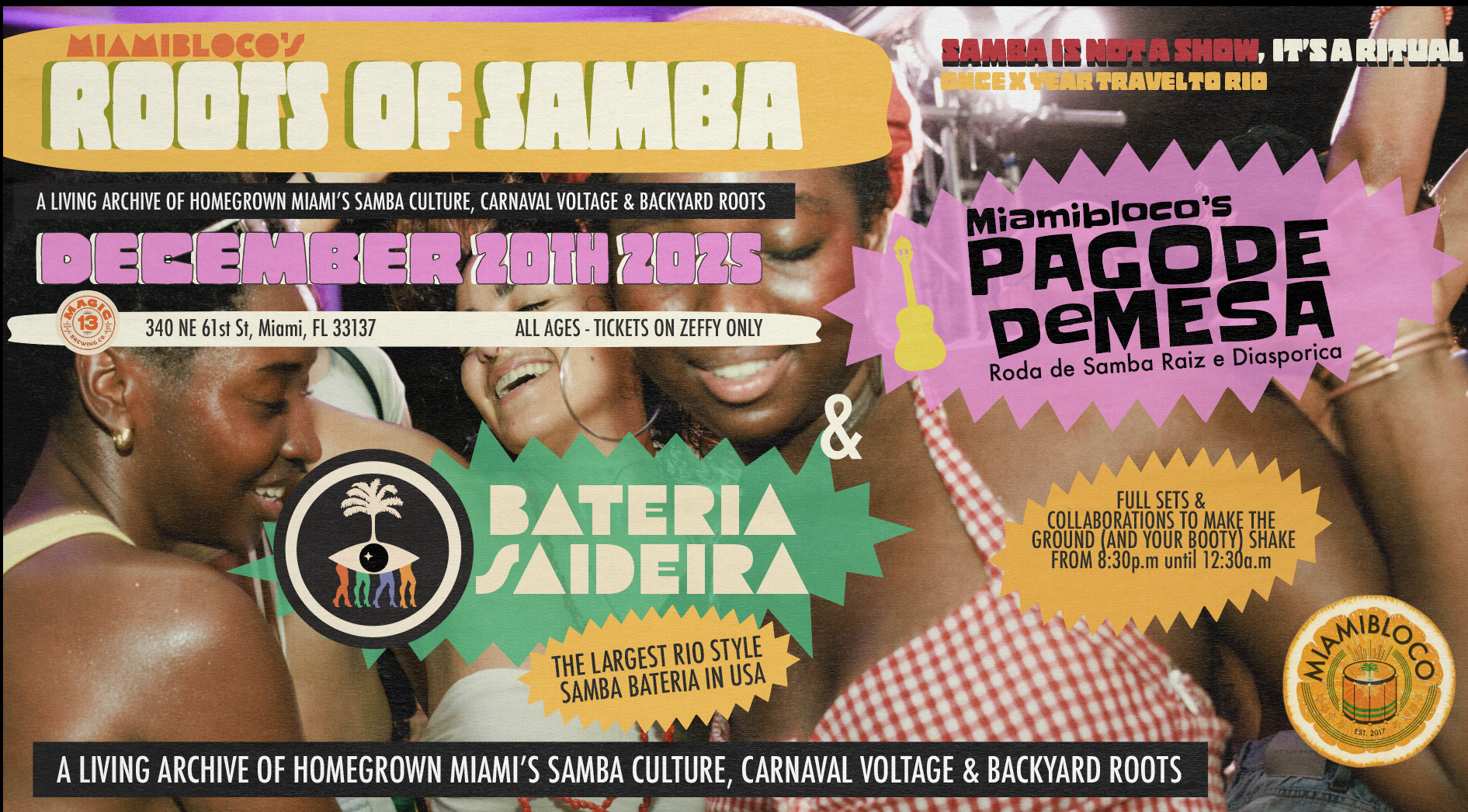
Miamibloco’s Roots of Samba: An Annual Samba-centered celebration every December.
Samba is first and foremost Black music, a living expression of the African diaspora that took root in Brazil through rhythms and movements like Angolan Semba and other Bantu-derived forms carried by enslaved people across the Atlantic. It is a political act of joy, a Black and Latin diasporic celebration that insists our cultures are not background noise but the main stage, even after centuries of persecution, criminalization, and later appropriation of Afro-Brazilian practices.
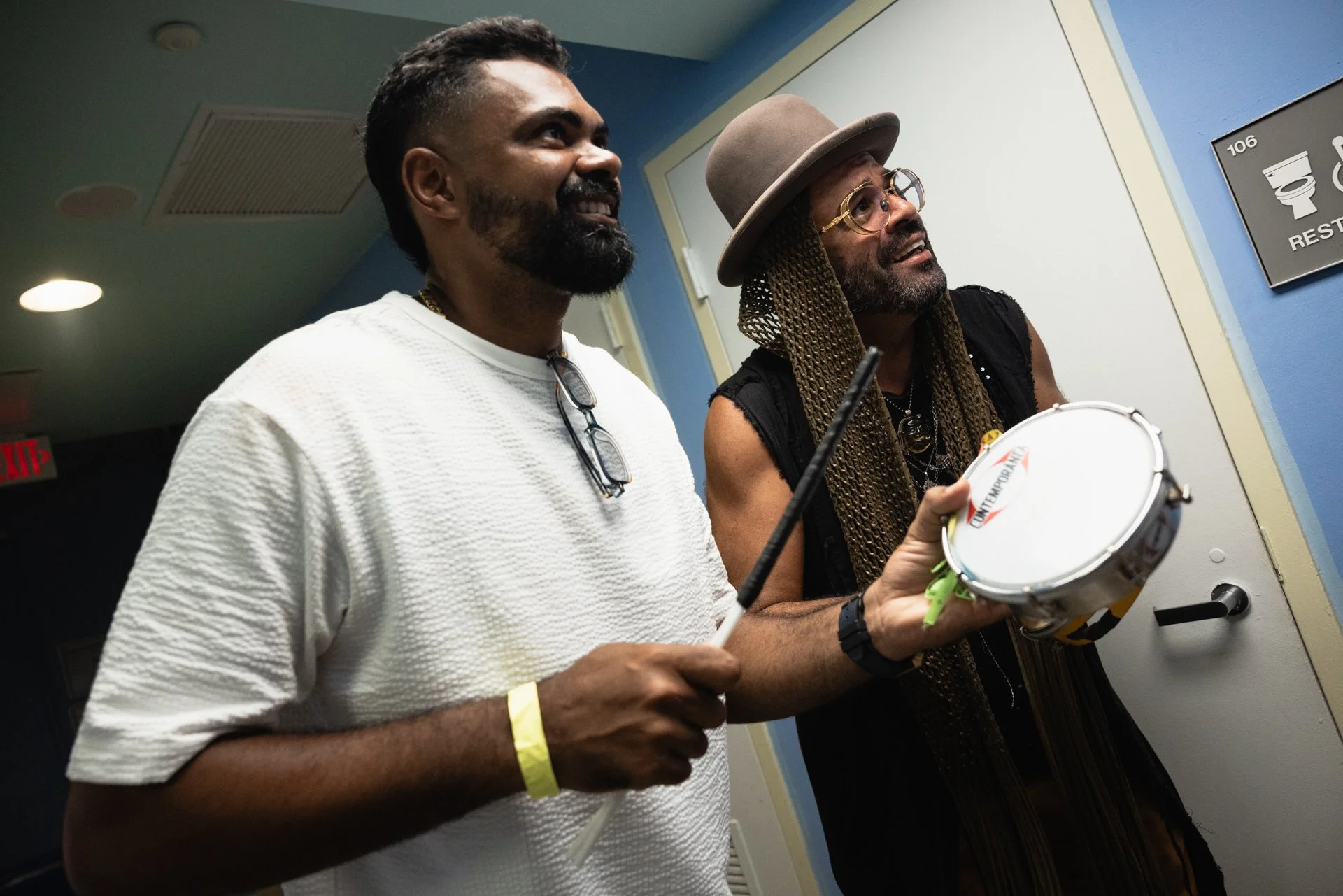
Mestre Guilherme Oliveira & Gilmar Gomes Backstage at the Miamibloco Saideira Social 2025.
As a co-founder of Miamibloco, this is exactly the lineage that feels both personal and non‑negotiable to honor. My own Raizal heritage is a direct result of the transatlantic slave trade, and because of that, using samba, drums, and street culture to uplift Black traditions in Miami is not just artistic or creative direction. For me, it is duty, pride, and moral obligation. Miamibloco exists as an Afro-diasporic project in a city built by migrations, using Brazilian samba and other Black rhythms of the Americas as a vehicle for belonging, visibility, and power.
Every event and program of Miamibloco is designed to center Black culture, not as an aesthetic, but as the origin story, the knowledge base, and the leadership we are accountable to. That shows up in the rhythms we choose, the artists and maestros we invite, the neighborhoods we play in, and the way we talk about samba as Afro-Brazilian, not “generic carnaval music.”
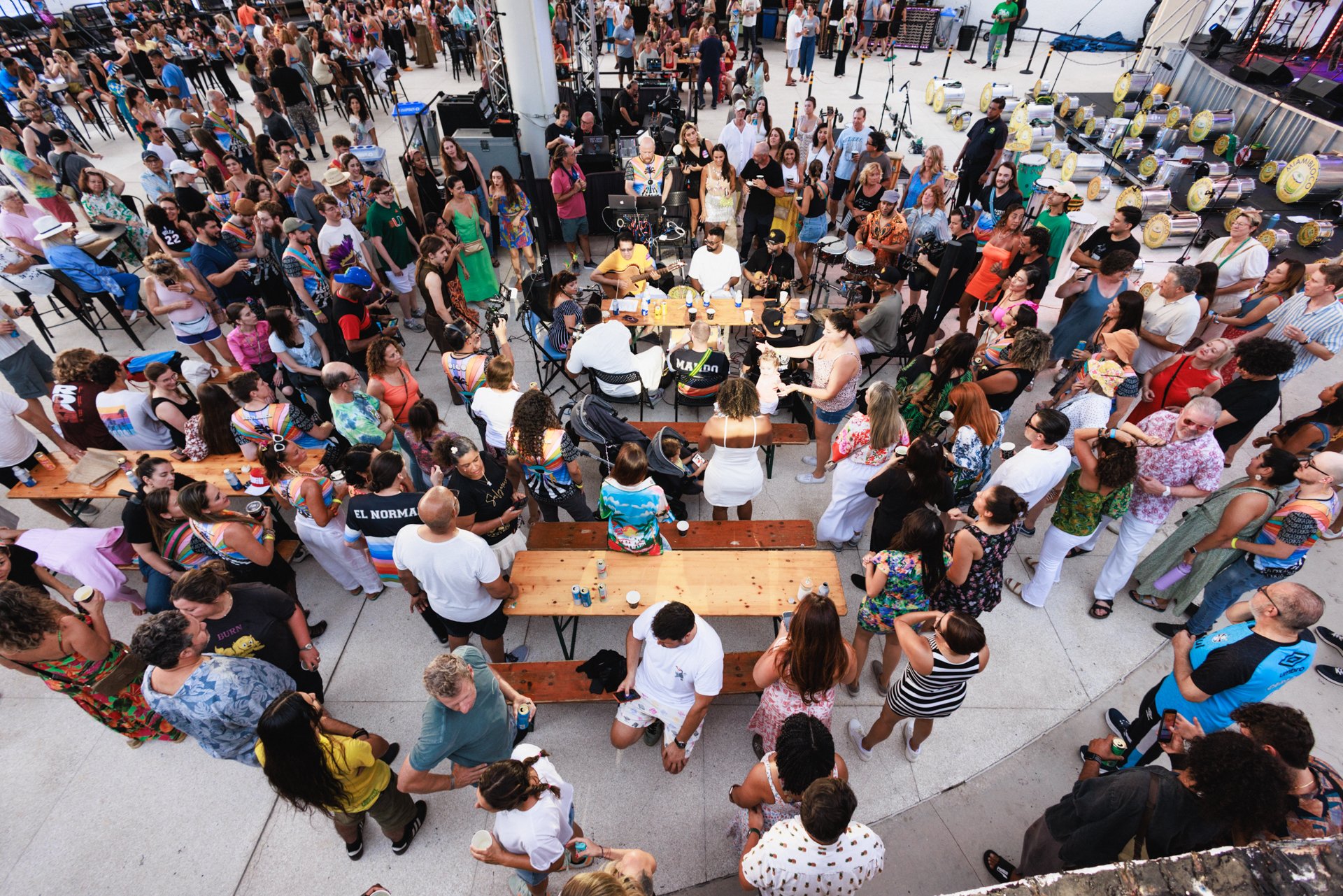
Pagode de Mesa - Roda de Samba always opens the Annual Miamibloco Saideira Social at Miami Beach Bandshell.
This commitment comes into sharp focus each December during ROOTS OF SAMBA: A LIVING ARCHIVE OF HOMEGROWN MIAMI’S SAMBA CULTURE, CARNAVAL VOLTAGE & BACKYARD ROOTS. These gatherings are where we trace the through-line from Angola to Bahia to Rio to Miami, and invite our community to feel that history in our bodies together. ROOTS OF SAMBA is as much about memory and repair as it is about spectacle, a space where drums, voices, and stories archive what this city’s Black and Afro-diasporic communities are creating right now.
Leaving my home country at 15, a lot of the milestones I have shared with childhood friends have been through screens, including weddings back in Colombia where “hora loca” appears as a moment of high-energy, costume-filled party hype. In Miami, I see how often samba and Afro-Brazilian aesthetics can be slotted into that same “party” role, stripped of context and Black authorship. Through Miamibloco and ROOTS OF SAMBA, I am intentionally choosing a different path: one where the voltage, spectacle, and joy remain, but the root stays visible, named, and celebrated as unequivocally Afro.
